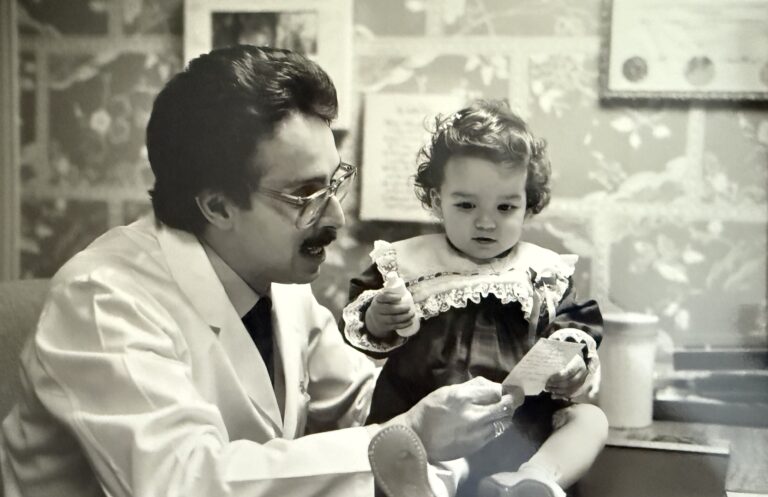
Earlier this week, at the age of 82, my father retired after 50 years of pediatric practice, every one of them in the practice he built from the ground up. When we began planning the party, my dad joked that inviting everyone would require renting the Astrodome. We celebrated in true Paredes fashion, with fajitas and margaritas in hand, and the crowd proved he wasn’t far off.
So many people came to celebrate him because of the way he practiced medicine. He cared for every patient personally, and he made sure every family who walked through his door knew that their entire family’s health, happiness, and well-being came first, well beyond the child on the exam table. Tuesday night, fifty years of families who felt that care came back to thank him.
His retirement also sent me looking for a primary care doctor for the first time in my life. Yes, he was my pediatrician, and yes, he continued to be my doctor well beyond when I should have found another (but I’m in good company, since his patients have always found him hard to leave).
As I reflected on his retirement over the past few weeks, I realized how much a pediatrician’s office and a school have in common. Both serve families who are trusting someone else with their children, and the habits that kept families with my dad for decades are the same ones that draw families to a school and keep them there. I learned those habits from him long before I ever worked in a school.
Lesson One: Listen
My dad drove me to school every morning, and once car phones came along, the drive became an extension of his office. Don’t worry — we had plenty of quality time together — but he also returned parents’ calls on the way in, and I got to be his scribe riding shotgun. Every call followed the same pattern. He let the parent tell him absolutely everything before he said a word, then asked his questions, and only then landed on a diagnosis or a directive for the next step. (For the record, his budding medical intern never heard a thing she shouldn’t have.)
Looking back, what happened on those calls was simple. A parent called with a worry, and by the time they hung up, they knew they had been heard. Trust starts there, and it’s why families kept coming back to him for decades. Customer service, as he practiced it, came down to one thing: every family felt understood, and every answer he gave proved he had been listening.
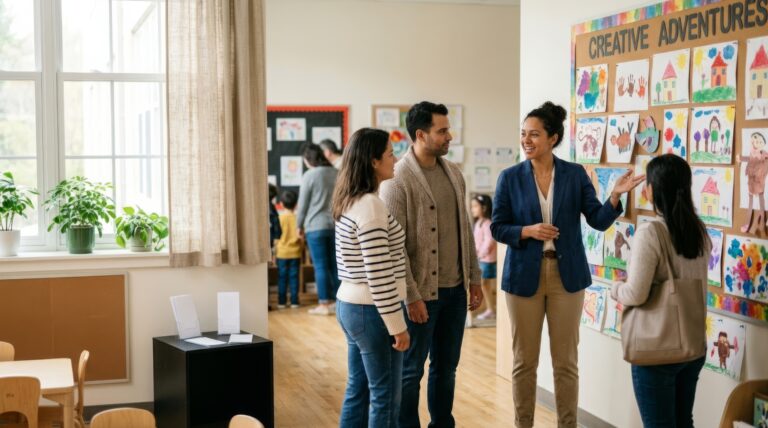
Schools get that same chance with every family who reaches out. Picture a parent on a tour who mentions, almost in passing, that her son had a hard year socially. The follow-up that proves we heard her speaks to that moment directly, with the advisory program, the way teachers watch for the quieter kids, or a current family she could talk to, and it arrives before she has to ask again. A family that feels heard that early starts trusting the school long before they apply.
Lesson Two: Put the Family First
My dad put every family’s needs ahead of his own schedule and convenience. He handed out his cell number right and left, even when he knew he probably shouldn’t. When a patient landed in the hospital, where hospitalists take over their care, he showed up at the bedside anyway. And somehow, through all of it, he made us, his own family, still feel like we were the center of his universe.
In schools, that means putting a family’s needs ahead of our own priorities and convenience. We love our schools, and it’s easy to lead every tour and every email with the programs and stories we’re proudest of. The families who choose us, and stay, are the ones who felt we were paying attention to them first.
Our systems can drift the same way. Inquiry forms, tour schedules, and follow-up timelines tend to follow the admissions calendar and the org chart, and families are left to connect the dots. Every one of those systems has its place. A pediatrician on call picks up the phone at 2 a.m., and no family expects an admissions director to do the same. Parents still have questions at 2 a.m., though, and our systems can be there to answer them. Designed around the family’s timing, they become the modern version of my dad’s cell number: an inquiry form backed by thoughtful automated follow-up, online tour registration so no one waits on a callback, and a personal call or message from a real person soon after a family reaches out.
Lesson Three: Mind the Details
Families judge a place by what they see before any conversation starts. My dad’s office was always spotless, so every family who walked in with a sick child found nothing short of his best, starting in the waiting room. Your campus is your waiting room. Walk it before your next tour the way a new parent would, past the clutter of the school day in the hallway, the wilting plant in the front office, and the bulletin board still showing last spring’s projects. A family that sees a school ready for them starts to trust that it will be ready for their child.
Lesson Four: Show Up
Trust also grows when you show up for families outside the school day. My dad went to his patients’ graduations and first communions whenever he could, and on days he was coaching one of our games, he often changed clothes in the car afterward and sped off to the party. Watching him show up for other families made it second nature to me, and I did the same throughout my years at Regis in Houston. Spend almost a decade with families, and you get to know not only the immediate family well, but grandparents and extended family too. You celebrate the happy milestones with them, and when they lose someone they love, you are there at the funeral to support them. Even though I don’t live in Houston anymore, I still make the trip back for those families, because those relationships didn’t end when my job did. A family that sees you show up on their hardest day knows you will show up for their child.
Fifty Years of Families
We run into his patients everywhere, from dinner out to vacations in other states, and every single time, he is overjoyed to see them.
Those reunions are what fifty years of families feeling heard looks like. His patients trusted him, stayed with him long past the cutoff, and are still glad to see him years later. Every school wants families like that: families who stay through graduation, send their friends our way, come back as engaged alumni, and give back long after their children have moved on. A school builds that kind of loyalty the same way he did, by listening first, putting the family’s needs ahead of its own, and showing up when it counts.
Every one of these lessons belongs in our everyday work in schools: on the phone with a nervous parent, in the hallway before a tour, in the follow-up after an open house, and at the funeral no job description asks us to attend. Each one tells a family they have been heard, and that is where trust begins.
When I went looking for that new doctor this year, I knew exactly what I wanted: someone who would listen and take their time with me. In other words, I went looking for my dad. Families walking through our doors are looking for the same thing: people who will listen, take the time to understand their child and their whole family, and earn their trust.
Congratulations, Dr. Paredes, Dr. P, Dad — and thank you for these lessons and so many more.
The Hat Trick: 3 Key Takeaways
Families trust the people who listen first.
Start every tour, call, and inquiry reply with the family’s questions, and build what you share around what they tell you about their child and their family.
Your systems should run on the family’s timing.
Inquiry forms, online tour registration, and automated follow-up answer questions at 2 a.m., and a personal note from a real person soon after makes them feel heard.
Trust is built outside the job description.
A tidy hallway before a tour and showing up on a family’s hardest day both show families that your school was ready for them and will be there for them.