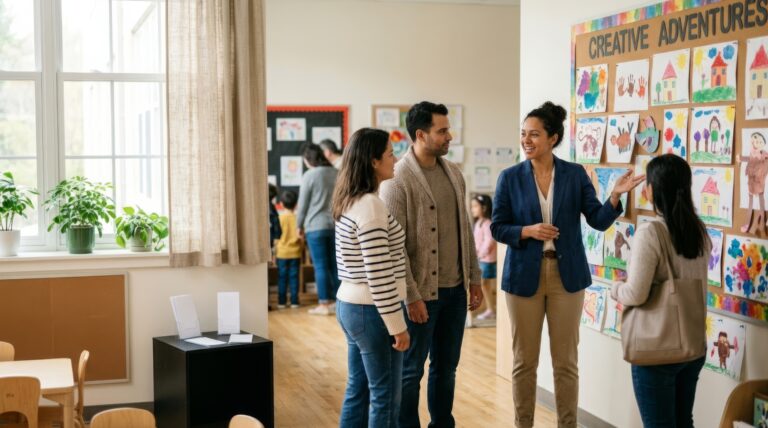
Your fall open house is coming. Invitations are going out, student ambassadors are lined up, and the classrooms will look their best. A lot of planning energy goes into that important morning, and it should, but the visit is only the opening. What happens in the days after a family tours your campus can do more for enrollment than the event itself, and it’s the part too many schools still leave to chance once the doors close.
This fall, many of you will run Admissions Events: an Open House in late September, another in October, maybe a smaller grade-specific event in November. Each one opens the same short, high-intent window. For a few days after a visit, a family is thinking about your school more than any other. They pictured their child in your hallways. That feeling is real, and it fades fast.
Follow up while the feeling is fresh
Planning the follow-up now is essential. Speed will be the whole game in those first days, so build it once so you can run it after every event this season. A thank-you that arrives the evening of the visit lands in a different world than one that shows up the following week. The family is still talking about it at dinner. Plan to meet them there.
- Reach out within 24 hours: decide now who sends the follow-up and when, so a same-day or next-day message goes out while the visit is still vivid. Waiting a week asks a family to rebuild a feeling you already earned.
- Make it personal: try to capture one specific detail about each family during the event. High attendance numbers can make this hard, but if you have a small school or a large team, then it’s worth a go. Mentioning the robotics lab their son wouldn’t leave, or the question a parent asked about learning support, and using it in the follow-up tells a parent you saw them.
- Come from a person: an admissions director’s name and voice will beat an anonymous message every time. Families are choosing people as much as programs.
Give families somewhere to go next
A warm thank-you feels good and, on its own, leads nowhere. Every follow-up should carry an obvious next step, sized to where the family is in their thinking.
- Name the next move: an application deadline, a shadow day, a coffee with the head of school, a chance to meet a coach. Decide the options in advance so the path forward is concrete.
- Match the touch to the family: a family ready to apply needs a different nudge than one still comparing three schools. If possible, sort your visitors after each event and speak to where they actually are.
- Keep more than one door open: a short sequence of touches over the following weeks beats a single email that either lands or doesn’t. Map out two or three before the season starts.
Bring the school into the follow-up
The people your visitors will connect with on campus can be your most powerful follow-up asset, and most schools leave them out of it.
- For High School admissions, loop in faculty and coaches: a two-line note from the teacher a family met carries a weight an admissions email can’t match. Line up who’s willing to send one before the event.
- Let current families speak: an offer to connect a prospective parent with a current one answers the questions families won’t ask you directly.
Build the system before the doors open
Set it up once and reuse it after every event this fall. A simple plan for who reaches out, how fast, with what message, and toward which next step turns follow-up from a post-event scramble into a system. Track what you send and what happens next, and each event will sharpen the next.
Your team already knows how to put on a great open house. The schools that turn those visits into enrollments decide what happens next before the first family walks in.
The doors haven’t opened yet. That’s the best time to plan for after they close.
The Hat Trick: 3 Key Takeaways
The follow-up window is short.
Set your plan before your first fall event so you’re ready to move fast, not scrambling to put something together after the doors close.
Personal beats automated.
Capture one specific detail about each family during the visit, send the follow-up from a real person within 24 hours, and give families a concrete next step to take.
Build the system once and run it all season.
Track what you send after every open house and what happens next, because each event gives you real data about what’s moving families forward and what’s falling flat.
If you’d like help building a follow-up sequence your team can run all fall, we’re here.
Frequently Asked Questions
How quickly should a school follow up after an open house?
Within 24 hours, ideally. A family who just toured your campus is thinking about your school more in those first hours than they will be a week later. The feeling a great visit creates is real, and it fades fast. A follow-up that arrives while the family is still talking about the visit at dinner lands in a completely different place than one that shows up days later.
What should a school include in an open house follow-up email?
A genuine thank-you, something personal that shows the family was seen during the visit, and a clear next step. The next step is the part most schools leave out. A warm message that doesn’t give a family anywhere to go next leaves the momentum you built at the event with nowhere to go. Whether it’s an application deadline, a shadow day, or a coffee with the head of school, the path forward should be obvious and easy to take.
How many follow-up touchpoints should a school send after an open house?
More than one. A single email that either lands or doesn’t is a weak strategy for a high-stakes decision. A short sequence of two or three touches over the weeks following the visit, each one moving the family toward a concrete next step, gives you more than one chance to keep the conversation going and meet families wherever they are in their thinking.
Should follow-up come from admissions or from faculty and staff?
Both, when possible. An email from an admissions director is expected. A short personal note from the teacher a family connected with during the visit, or the coach whose program their child kept asking about, carries a weight that an admissions email simply cannot match. Identify who on your faculty and staff is willing to send a follow-up note and line them up before the event.
How do schools personalize follow-up at scale when open house attendance is high?
It takes intention before the event. Brief your team to capture one specific detail about each family during the visit, a question a parent asked, a program a child couldn’t stop talking about, a concern that came up on the tour. Even a simple note taken during the event gives you enough to make the follow-up feel personal rather than generic. For very large events where this isn’t realistic for every family, prioritize personalization for the families who showed the strongest interest.